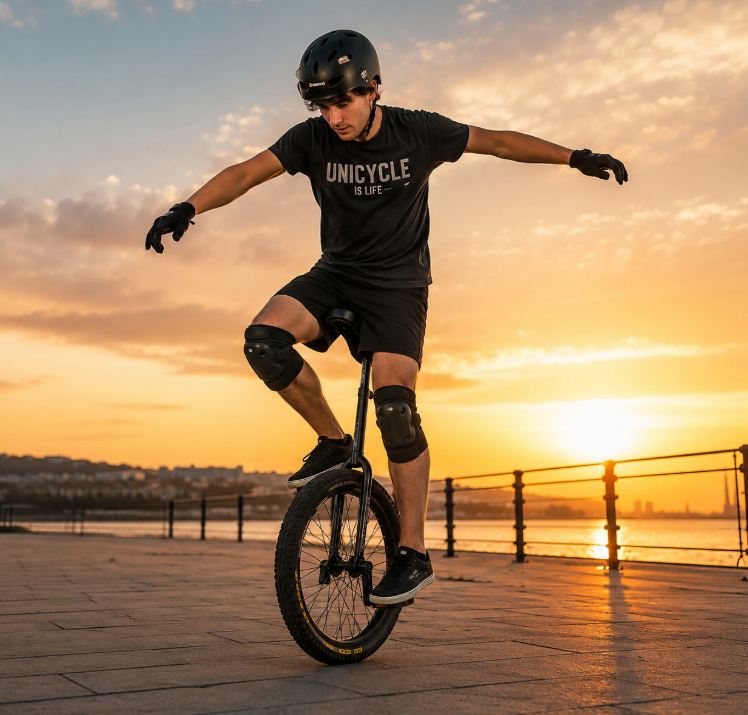
Unicycle balance practice doesn’t have to feel like repetition on a tightrope. When https://www.tektekerbisiklet.com/ approached the right way, it becomes a playful exploration of movement and control. Every small wobble is part of learning, and every correction is a step toward mastery. Turning practice into fun keeps motivation high and progress steady. Balance becomes less of a struggle and more of a game with gravity. Good balance starts with understanding how your body moves over the wheel. Keep your posture upright, shoulders relaxed, and eyes forward. The key is to make small adjustments using your hips instead of overreacting with your upper body. This helps the unicycle stay aligned under your center of gravity. Over time, these subtle corrections become automatic and natural.
Slow Riding as a Control Game
Slow riding is one of the most effective and enjoyable ways to improve balance. Try riding as slowly as possible without stopping, like moving through invisible checkpoints. The challenge is to stay upright while minimizing speed. This turns practice into a focus exercise where control matters more than distance. It builds patience, precision, and stability. Drawing an imaginary line on the ground and riding along it helps sharpen balance skills. The goal is to stay as straight and steady as possible without drifting. This exercise improves direction control and concentration. It also trains the rider to make micro-adjustments while moving forward. Small improvements in accuracy lead to big gains in confidence.
One-Hand and Free-Hand Balance Play
Once basic control improves, lifting one hand becomes a fun challenge. Start by briefly releasing one hand from support while maintaining steady motion. Gradually progress to alternating hands or riding with both hands relaxed. This builds core stability and reduces reliance on upper-body support. It also adds a playful feeling of freedom during practice. Turning doesn’t have to feel technical—it can be treated like a flow game. Start with wide circles and gradually tighten the radius. Try switching directions smoothly without losing balance. Focus on maintaining rhythm instead of forcing sharp movements. This transforms turning into a dynamic coordination exercise.
Mounting Practice for Confidence
Mounting the unicycle is often the hardest part for beginners, but it can become a mini challenge game. Try repeated mounting attempts with smooth control rather than rushing. Each successful mount builds confidence and consistency. Over time, it feels less like a struggle and more like a quick, controlled start to riding. Wobbling is not failure—it is training feedback. Practice recovering from slight tilts without stopping the ride. Learn to correct balance using small pedal adjustments instead of panic movements. This improves reaction time and stability under pressure. Recovery skills are what make riding feel smooth and controlled.
Using Rhythm and Flow for Fun
Adding rhythm to practice makes balance training more enjoyable. Pedal in steady timing, almost like following a beat in your head. Smooth rhythm helps reduce instability and keeps movement consistent. It also creates a flow state where riding feels natural and effortless. Balance improves when movement feels musical. The secret to turning balance practice into fun is repetition without pressure. Short daily sessions are more effective than long exhausting ones. Each ride strengthens coordination and muscle memory. Over time, balance becomes instinctive rather than forced. What once felt difficult slowly turns into effortless control and enjoyment.
Recent Comments